Encapsulation vs. Extraction Carpet Cleaning: Which Method Is Best for Your Business?
Choosing the right carpet cleaning method is critical for preserving your commercial carpets, extending their lifespan, and maintaining a professional, healthy workplace.
Two methods dominate the industry today: encapsulation carpet cleaning and hot water extraction.
But which one is better for your business?
In this guide, we break down the differences, benefits, and ideal uses for each method so you can make a smart, cost-effective decision.
What Is Encapsulation Carpet Cleaning?
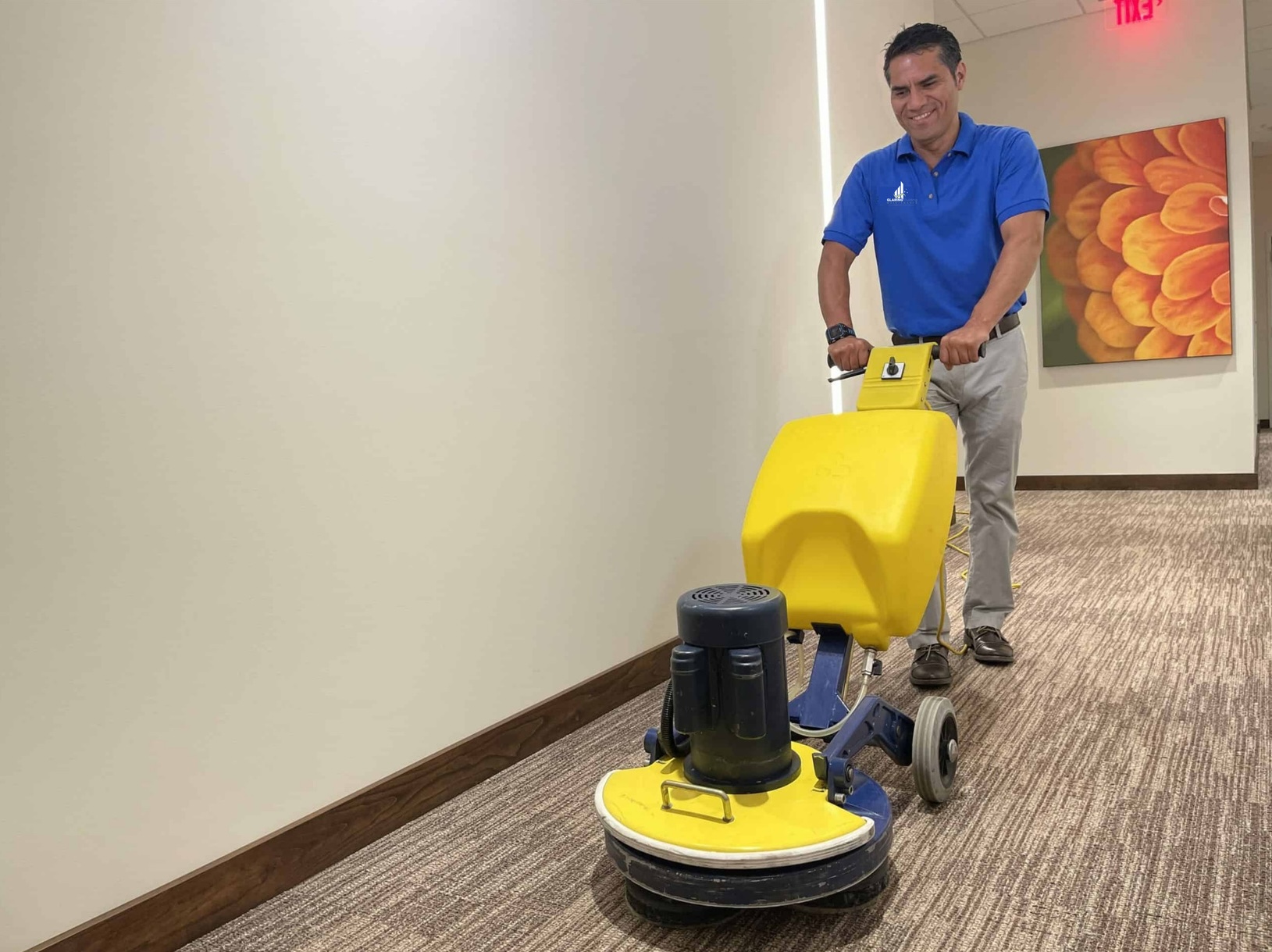
Encapsulation is a low-moisture carpet cleaning method designed for commercial settings with high foot traffic.
How It Works
- A special polymer solution is applied to the carpet fibers.
- This solution crystallizes around dirt particles, trapping them.
- Once it dries, the residue is vacuumed out—leaving carpets clean, bright, and ready to use almost immediately.
Key Benefits of Encapsulation
- ✔ Fast drying time (20–60 minutes)
- ✔ Low-moisture system prevents mold and wick-back
- ✔ Ideal for routine maintenance
- ✔ Reduces resoiling and keeps carpets cleaner longer
- ✔ Cost-effective for large facilities
- ✔ Safe for most commercial carpet types
Best For
- Offices
- Schools
- Corporate buildings
- Retail stores
- Facilities with daily foot traffic
- Areas that need quick turnaround
What Is Extraction Carpet Cleaning?
Hot water extraction (often called "steam cleaning") is a deep-cleaning carpet method that uses heated water and high-pressure suction.
How It Works
- A machine injects hot water mixed with cleaning solutions into the carpet fibers.
- It then extracts dirt, bacteria, allergens, and debris from deep within the carpet pile.
Key Benefits of Extraction
- ✔ Superior deep cleaning power
- ✔ Removes bacteria, allergens, and stubborn stains
- ✔ Restores carpet appearance and texture
- ✔ Great for periodic deep cleaning programs
Best For
- Carpets with heavy soil or stains
- Long-term buildup
- Annual or semi-annual deep cleaning
- Facilities with food areas, kitchens, or cafeterias
Encapsulation vs. Extraction: Side-by-Side Comparison
Dry Time: Encapsulation: 20–60 minutes | Extraction: 6–24 hours
Moisture Level: Encapsulation: Very low | Extraction: High
Deep Cleaning Power: Encapsulation: Medium | Extraction: Very high
Best Use: Encapsulation: Routine maintenance | Extraction: Periodic deep cleaning
Foot Traffic Ready: Encapsulation: Almost immediately | Extraction: Next day
Risk of Wick-Back: Encapsulation: Extremely low | Extraction: Moderate
Cost: Encapsulation: More affordable | Extraction: Higher
Frequency: Encapsulation: Monthly or bi-weekly | Extraction: 1–2 times per year
Which Method Should Your Business Choose?
Choose Encapsulation If You Want:
- Fast-drying carpets
- Routine maintenance cleaning
- Cost-effective solutions
- Reduced downtime
- Cleaner appearance week after week
Choose Extraction If You Need:
- Deep restoration
- Stain and spot removal
- Annual or semi-annual deep cleaning
- Removal of allergens and bacteria
The Best Strategy: Using Both Methods Together
For the highest level of carpet care, most professional facility managers choose a combined program:
🟩 Monthly Encapsulation + 🟥 Annual Extraction
This provides:
- Continuous fresh appearance
- Long-term protection
- Extended carpet lifespan
- Healthier indoor air quality
- Better cost control across the year
This "hybrid method" is one of Glaring Building Maintenance's recommended strategies for commercial buildings.
Encapsulation and extraction are both effective—but they serve different purposes.
Encapsulation keeps your carpets consistently clean, while extraction delivers the deep reset your facility needs a few times a year.
Choosing the right combination protects your investment, strengthens your brand image, and ensures a clean environment for employees and visitors.
If you want a customized carpet care program tailored to your facility's needs, Glaring Building Maintenance offers professional encapsulation and extraction services across New England. Contact us today for a fast and accurate estimate.